
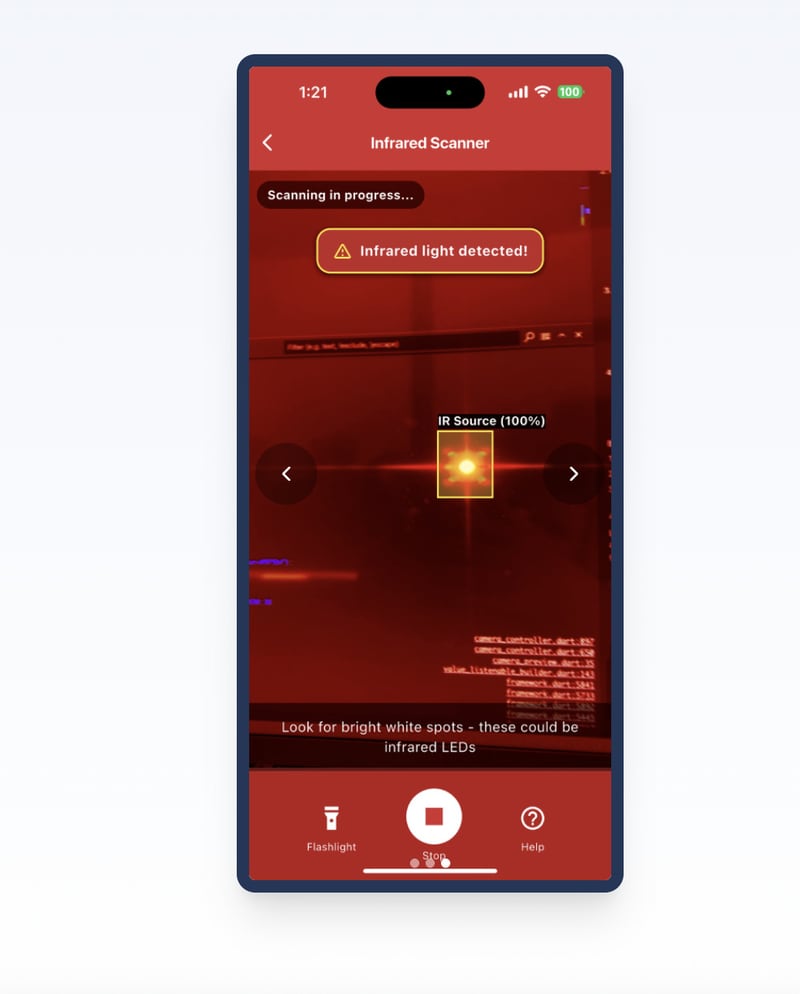
SpyFy is a mobile application designed to detect hidden cameras in physical environments, aiming to enhance personal privacy and security. The platform leverages device sensors and detection algorithms to identify potential surveillance equipment, alerting users to their presence.
By providing a user-friendly interface and real-time scanning capabilities, the app allows individuals to assess rooms, offices, or accommodations quickly. From a business and security perspective, tools like SpyFy reflect growing consumer demand for personal safety technology and privacy management. Such applications are relevant for travelers, remote workers, or anyone concerned about unauthorized recording. The platform highlights the broader trend of integrating mobile technology with privacy protection, offering accessible, on-demand solutions for monitoring environments and mitigating risks associated with hidden surveillance devices.
Image Credit: SpyFy
What's Driving This Trend
- Mobile Privacy Scanning
- On-device scanning tools that use smartphones to locate hidden cameras create new paradigms for personal privacy monitoring in everyday environments.
- Sensor-based Surveillance Detection
- Fusion of multiple phone sensors and detection algorithms is enabling more accurate identification of covert recording devices without specialized hardware.
- Privacy-as-a-service
- Subscription models offering continuous updates, cloud-assisted analysis, and incident reporting are reshaping how users access and maintain personal surveillance protection.
Who This Affects Most
- Hospitality
- Hotels and short-term rentals face rising demand for guest-facing privacy assurance tools that could be embedded into booking platforms and in-room services.
- Corporate Security
- Workplaces concerned with intellectual property and employee safety are increasingly valuing easy-to-deploy room scanning capabilities for meeting rooms and shared spaces.
- Consumer Electronics
- Smartphone and IoT manufacturers stand to reconsider device sensor access and integrated privacy features as consumer expectations for built-in surveillance detection grow.