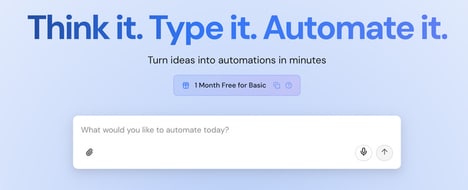
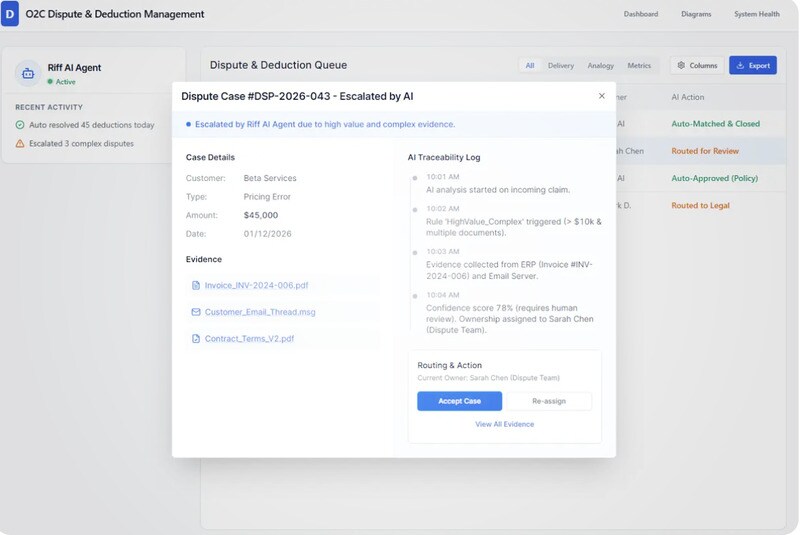
Riff.ai is a platform designed to help non-technical teams build internal apps and AI agents for real workplace use. It enables teams in functions such as sales, marketing, finance, and operations to create production-ready tools without writing code. Users can start from scratch or customize prebuilt templates, then connect existing systems like CRM, analytics, payments, and spreadsheets to support real workflows.
From a business perspective, Riff.ai focuses on operational problem-solving rather than rapid prototyping. It emphasizes deployment readiness, with built-in security, governance, and human-in-the-loop controls to support responsible AI usage. By reducing reliance on engineering resources for internal tooling, Riff.ai aims to shorten development cycles and improve team autonomy. The platform positions itself as infrastructure for durable, internal applications rather than experimental or consumer-facing projects.
Image Credit: Riff.ai
What Makes This Trend Stand Out
- No-code Enterprise AI
- Platforms that let non-technical teams compose production-ready AI tools without engineering dependency create opportunities for organizations to decentralize app development and accelerate internal digital transformation.
- Human-in-the-loop Governance
- Human-centric controls and built-in security measures for deployed AI models introduce possibilities for responsibly scaling autonomous agents in regulated and mission-critical workflows.
- Workflow-integrated AI Agents
- AI agents that connect directly to existing systems like CRMs, analytics, and payments enable the embedding of intelligent automation into end-to-end business processes for continuous operational value.
Sectors Adopting This
- Sales-and-marketing
- Sales and marketing functions stand to benefit from customizable AI apps that generate personalized outreach, streamline pipeline management, and synthesize customer insights from disparate data sources.
- Finance-and-accounting
- Finance teams could leverage production-ready AI agents for tasks such as automated reconciliation, anomaly detection, and real-time reporting while maintaining auditability and controls.
- Operations-and-it
- Operations and IT departments may see durable internal tooling opportunities through low-code AI platforms that reduce engineering backlog while preserving governance and integration with legacy systems.