
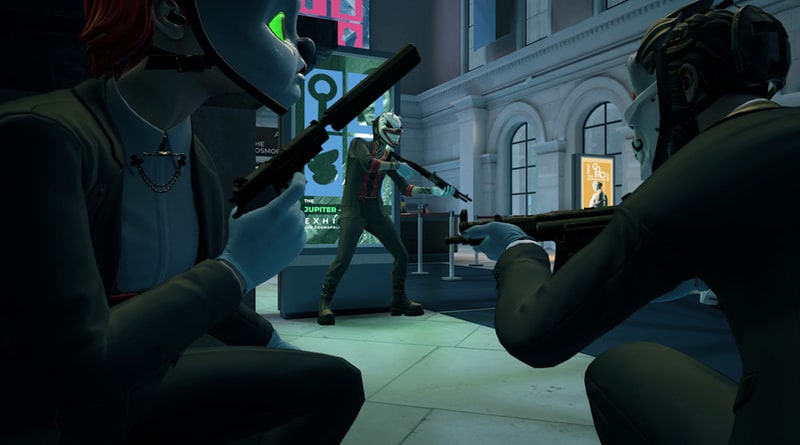
Payday: Aces High is a virtual reality entry in the Payday franchise developed by Fast Travel Games, launching for Meta Quest and SteamVR later this year. The title recreates the series’ cooperative heist formula in VR, featuring four-player roles and immersive, first-person interaction with tools and targets.
Players will assemble teams using archetypal roles — planner, brawler, gadget specialist and stealth operative — and execute multi-stage robberies with an expanding roster of weapons, gadgets and cosmetic masks. The game preserves Payday’s progression loop, letting successful scores fund new gear while leveraging Fast Travel Games’ VR experience for polished visuals and interactions.
For players, the shift to VR promises heightened presence and teamwork-driven gameplay that amplifies the franchise’s social and tactical appeal. As major franchises adapt to virtual reality, Payday: Aces High highlights how established multiplayer formulas can be reimagined to deliver more physical, cooperative experiences.
Image Credit: Fast Travel Games
Key Themes Behind This Trend
- Immersive Cooperative VR
- The rise of four-player, role-based VR heists creates potential for new platforms that blend physical teamwork with persistent progression systems.
- Franchise VR Adaptations
- Major IPs migrating to VR open room for reimagined gameplay loops that combine legacy mechanics with embodied, first-person interactions.
- Tactical Role Specialization
- Specialized archetypes in live VR encounters suggest marketplaces for role-tailored gear, training modules and asymmetric challenge design.
Where This Applies
- Gaming Hardware
- Next-Generation Haptics And Motion Controllers Are Positioned To Change How Physical Tools And Weapon Interactions Are Simulated In Cooperative VR Titles.
- Esports and Competitive Events
- Organized VR heist competitions could redefine spectator formats by leveraging immersive POVs and team-based strategy broadcasts.
- Enterprise Training and Simulation
- Business and security training sectors may benefit from realistic, cooperative VR scenarios that translate game-style role coordination into real-world procedural practice.