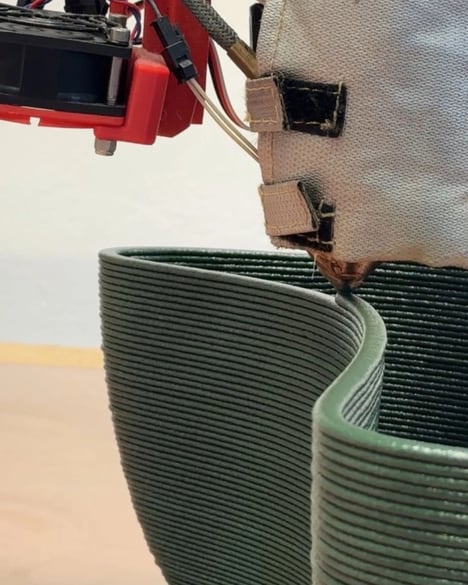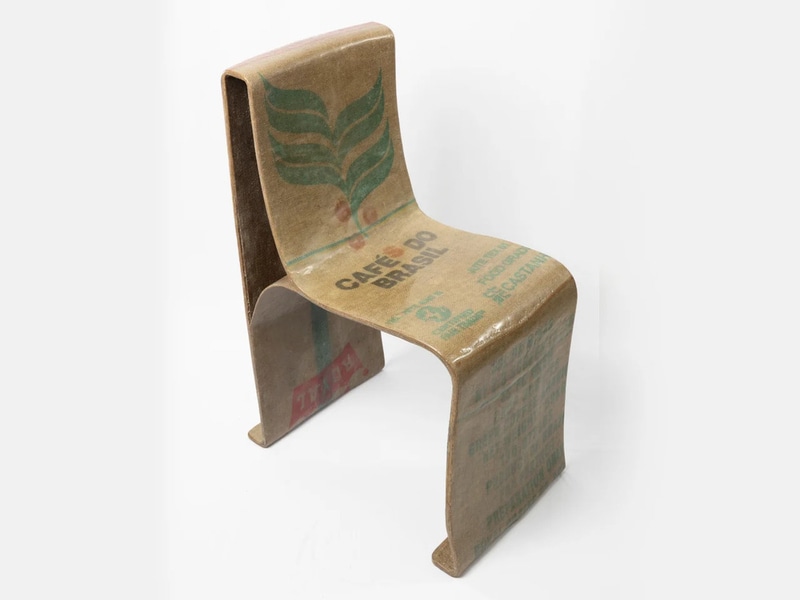
The Novum chair by The New Raw presents a 3D-printed seating design developed from a single, controlled recycled plastic source. The Novum chair is fabricated through robotic extrusion, where molten material is deposited in continuous lines to build the seat and structural base in one process. Its surface is defined by layered strands that stack into a dense geometry, forming both texture and load-bearing support without separate components or assembly.
The production method relies on mono-material input to maintain consistency across the structure, avoiding blended recycled plastics with variable composition. Each layer is applied with controlled spacing and thickness to create strength through accumulation rather than internal framing. The resulting form is a single-piece chair with visible print paths, where structure and surface are generated simultaneously through additive manufacturing.
Image Credit: Matthew Whatley
Key Themes Behind This Trend
- Mono-material Additive Manufacturing
- Enables closed-loop recycling systems by producing functional products from a single recycled polymer, reducing material sorting complexity and contamination risk.
- Visible-path Aesthetic
- Highlights manufacturing provenance as a design feature, creating new value propositions around traceable, honest aesthetics that communicate sustainability and process.
- Continuous-extrusion Structural Fabrication
- Demonstrates that load-bearing geometry can be generated through controlled deposition patterns, allowing structural performance to emerge from print-path strategies rather than traditional assemblies.
Where This Applies
- Furniture Manufacturing
- Presents opportunities to streamline production by replacing multi-part assemblies with single-piece, 3D-printed furnishings that lower labor and inventory complexity.
- Sustainable Materials Supply Chain
- Signals demand for consistent, high-quality mono-material recyclate streams and certification systems that support additive fabrication at scale.
- Robotic Construction and Automation
- Suggests potential for scalable robotic extrusion platforms to fabricate large-format, monolithic components with integrated surface and structure, transforming on-site production methods.