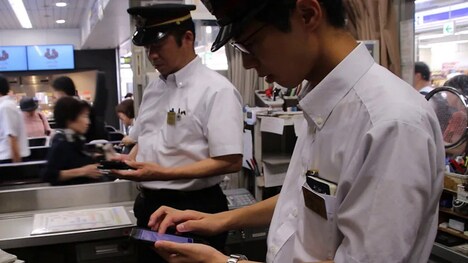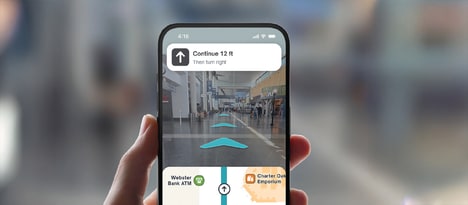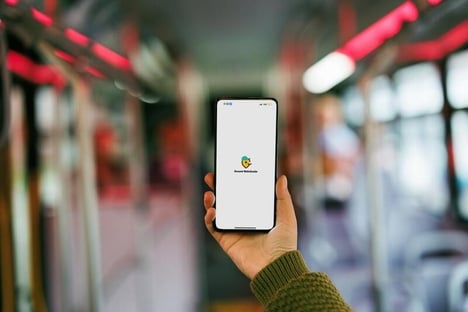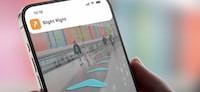
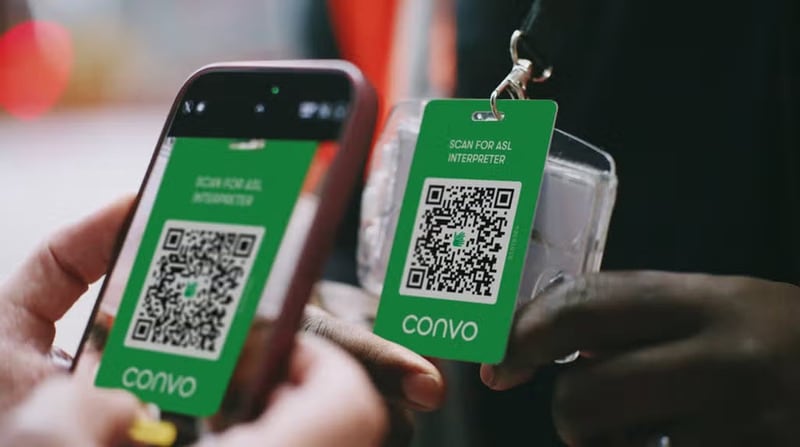
NJ TRANSIT is initiating a trial program at two of its major stations to enhance assistance for passengers with specific disabilities. At Hoboken Terminal, the pilot involves an application named GoodMaps, which is engineered to provide detailed, turn-by-turn guidance within the building's interior. The app functions similarly to an indoor GPS with audio and visual prompts to aid those with visual impairments. At Newark Penn Station, NJ TRANSIT is testing a different service called Convo. This technology enables passengers to use their smartphones to connect with a remote American Sign Language interpreter through a QR code. The app facilitates real-time communication with station staff.
NJ TRANSIT's accessibility-focused pilot programs are launched in collaboration with the Transit Tech Lab, "a program administered by the Partnership Fund for New York City."
Image Credit: NJ TRANSIT
Key Themes Behind This Trend
- Indoor Navigation Apps
- Indoor navigation apps like GoodMaps are transforming accessibility by offering precise, app-based GPS-like guidance for visually impaired users.
- Remote Interpretation Services
- Remote interpretation services, such as those provided by Convo, are revolutionizing communication for deaf and hard-of-hearing passengers through smartphone connectivity.
- QR Code Accessibility Solutions
- The use of QR codes in accessibility solutions is facilitating quick and effortless access to assistive services in public transport environments.
Where This Applies
- Assistive Technology
- The assistive technology industry is rapidly evolving with innovative solutions like turn-by-turn indoor navigation and real-time interpretation services.
- Public Transportation
- Public transportation is undergoing a transformative shift as it integrates advanced technologies to improve accessibility for passengers with disabilities.
- Digital Communication Tools
- Digital communication tools are increasingly being adopted to bridge the accessibility gap in public infrastructures, exemplified by remote ASL interpretation and QR code technologies.