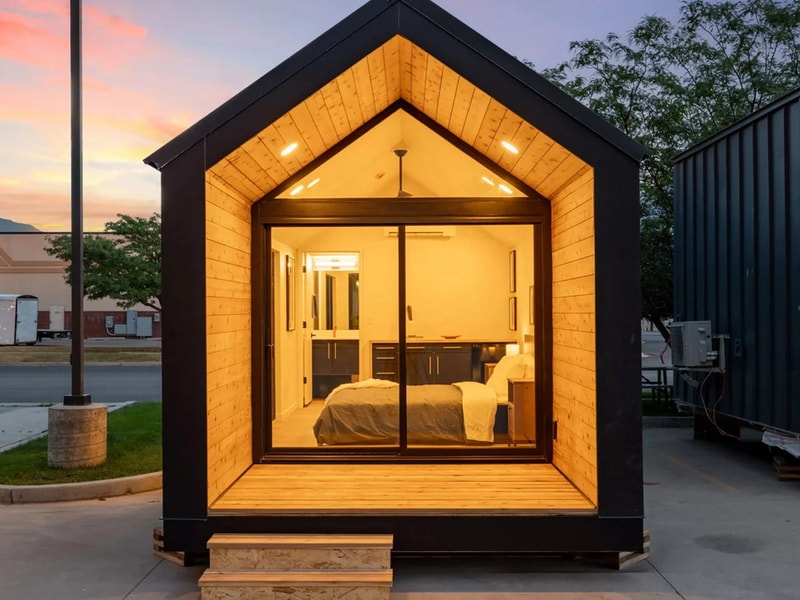
The Mysa 200 tiny cabin is a compact prefabricated dwelling developed by Irontown Modular. Measuring 20 feet long and 10 feet wide, the cabin offers a 200-square-foot interior designed around a single-level layout rather than lofted sleeping areas common in many tiny houses. The Mysa 200 tiny cabin trades space-saving gimmicks for a simpler floor plan that feels more like a small cabin than a towable tiny home. Because the structure is wider than standard trailer-based units, it is delivered by truck and crane and intended for permanent or semi-permanent installation.
Exterior finishes combine wood and metal cladding to create a modern rustic appearance suited to wooded or rural settings. Large windows draw daylight into the interior, while an optional porch extends the living space outdoors. The layout centers on a combined living and sleeping area anchored by a large double bed that also functions as a lounge. A dry bar with storage and refrigerator sits nearby, with the option to upgrade to a kitchenette. The bathroom includes a glass-enclosed shower, vanity sink, and flushing toilet
Image Credit: Irontown Modular
What's Driving This Trend
- Single-level Tiny Living
- A ground-floor-focused tiny cabin format replaces lofted designs with accessible, multiuse living-sleeping spaces that enable new models of compact permanent residency.
- Crane-delivered Prefabrication
- Truck-and-crane delivery of wider-than-trailer modular units shifts site selection and installation logistics, opening possibilities for scalable off-site production paired with on-site placement.
- Indoor-outdoor Integration
- Large windows and optional porches blur the boundary between interior and exterior, creating opportunities for units that extend living programs into landscapes and seasonally adaptive spaces.
Who This Affects Most
- Modular Home Manufacturing
- Manufacturers can capitalize on demand for single-level prefabricated cabins by rethinking panelization, finish options, and delivery workflows to serve permanent and semi-permanent markets.
- Rural Hospitality and Glamping
- Nature-facing compact cabins with modern-rustic aesthetics present new product types for boutique lodging that prioritize turnkey placement and low-footprint guest experiences.
- Senior and Accessible Housing
- Accessible single-level tiny units offer a compact alternative for aging-in-place strategies, providing simpler floor plans and reduced mobility barriers compared with traditional tiny-house loft arrangements.