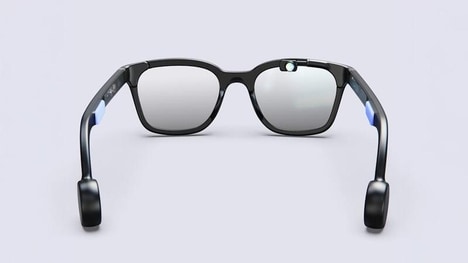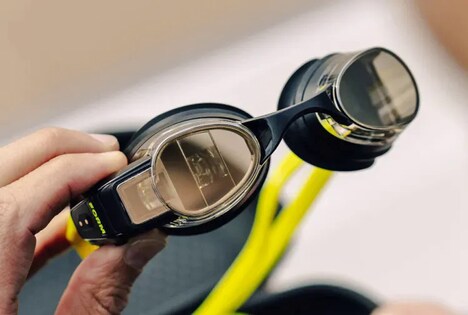
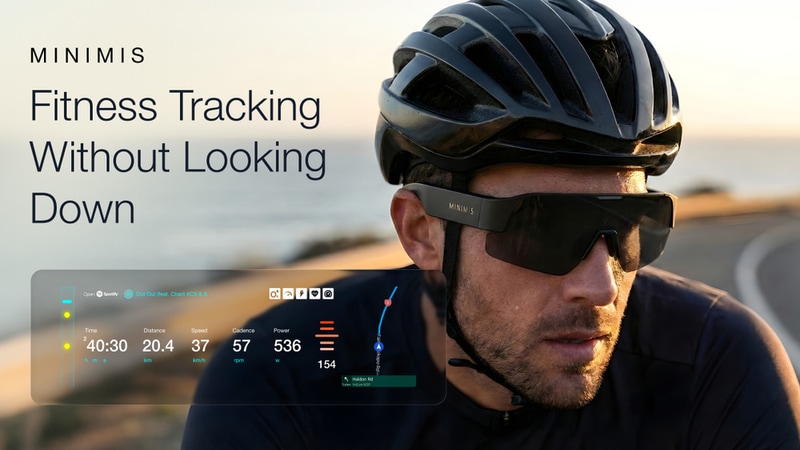
Minimis — a San Francisco-based sports technology company — has developed the Minimis Flow. This pair of standalone smart sunglasses is designed to replace traditional fitness wearables such as Garmin watches and other bike computers.
The Minimis Flow consolidates an optical heart rate tracker, GPS, ANT+ chip, and eSIM capability directly into lightweight eyewear, which allows runners and cyclists to leave their phones and watches at home while still making calls and tracking performance data through a head-up display.
In essence, Minimis Flow promises to simplify the workout experience and enhance safety. By eliminating the need to glance down at a wrist or handlebar mounted device, athletes can keep their eyes on the road or trail, reducing accident risk and improving focus, as well.
Image Credit: Minimis
Why This Trend Is Growing
- Heads-up Display Wearables
- Integration of HUDs into everyday sports gear enables uninterrupted real-time biometric and navigational feedback that can supplant wrist- and bar-mounted devices.
- Sensor-integrated Eyewear
- Miniaturized optics and multi-sensor arrays embedded in sunglasses create a new form factor for continuous health and performance monitoring during movement.
- Phone-free Connected Devices
- Standalone connectivity via eSIM and ANT+ in lightweight wearables reduces reliance on smartphones, shifting the endpoint for calls, data and tracking to dedicated apparel.
Industries Being Reshaped
- Sports Technology
- Wearables that consolidate GPS, optical HR and connectivity into single-purpose athletic gear present potential to redefine product roadmaps and consumer expectations in performance tracking.
- Cycling and Running Equipment
- Equipment makers could see traditional handlebar computers and wrist units challenged by aerodynamic, vision-forward solutions that prioritize line-of-sight safety and data accessibility.
- Telecommunications for Wearables
- Network and SIM providers are positioned to support a surge in native-connected wearables, affecting billing models, data plans and low-power wide-area connectivity strategies.