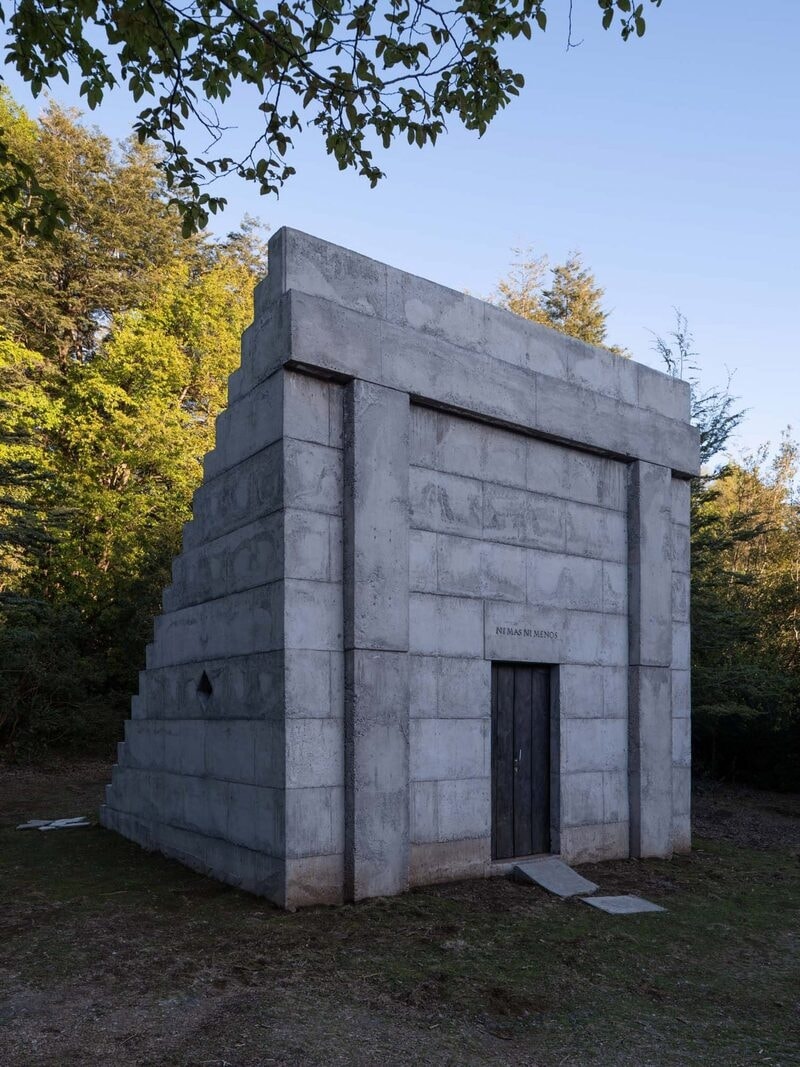
The Miel Pavilion by Chilean studio Pezo von Ellrichshausen stands in the forested Yungay region of Chile as both a functional honey-processing facility and an architectural retreat. The small concrete structure features a bold asymmetrical façade that captures the evening light, while its amphitheater-like opening faces the sunrise and frames views of surrounding trees. The design emphasizes a direct relationship with nature, allowing light, air, and texture to define the experience of space.
Built on the same 150-hectare property as the studio’s Luna House, the pavilion is part of a larger initiative to preserve native forests through artistic and ecological projects. Its raw concrete surfaces and restrained geometry give the building a timeless, monolithic quality that blends quietly into its natural environment. The result is a meditative space that reflects the harmony between craft, landscape, and sustainable practice.
Image Credit: Pezo von Ellrichshausen
Why This Trend Is Growing
- Nature-integrated Architecture
- The trend emphasizes architectural designs that harmoniously integrate with natural environments, creating spaces that prioritize ecological balance and sustainability.
- Multifunctional Spaces
- Designing structures that serve dual purposes, such as combining honey processing with experiential retreats, enhances usability and brings a fresh perspective to traditional facilities.
- Material Expressiveness
- The use of raw and minimalistic materials in construction is highlighted for their ability to connect with their surroundings, offering an inherently sustainable and aesthetic appeal.
Industries Being Reshaped
- Eco-friendly Construction
- This industry is seeing growth in demand for building techniques and materials that minimize environmental impact while maintaining aesthetic and functional integrity.
- Sustainable Agriculture
- The integration of agriculture with environmentally mindful architectural solutions presents a novel avenue for crop production and processing.
- Rural Tourism Development
- By creating immersive experiences that blend nature with innovative architecture, there's potential for a new niche in tourism focusing on ecological and artistic retreats.