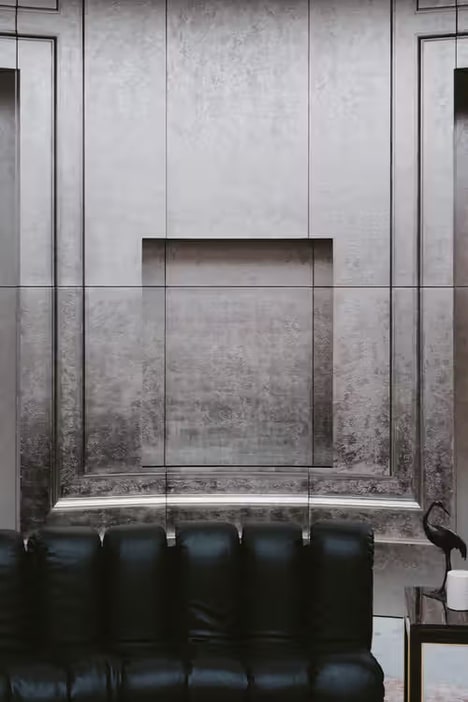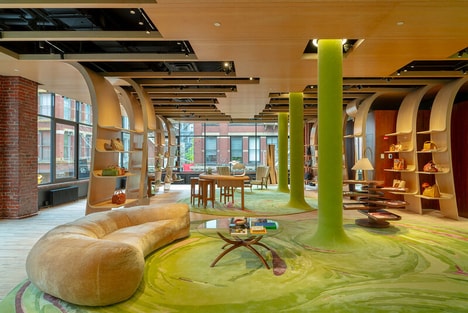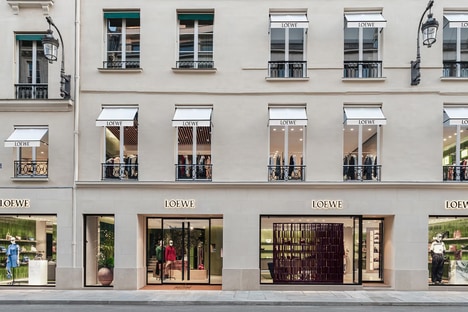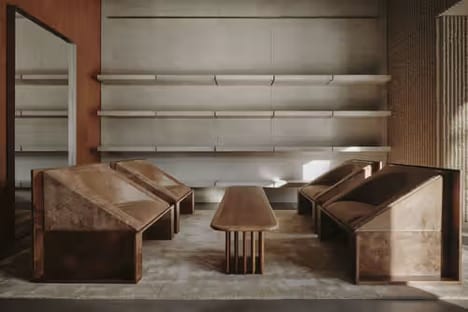
French designer Marc-Antoine Barrois opened a new flagship store in New York’s SoHo neighborhood, creating a multiroom retail space that brings together fragrance, ready-to-wear, couture, accessories and jewelry under one concept. Developed with architect Antoine Bouillot, the 300-square-meter location at 120 Wooster Street features six-meter ceilings, a suspended black-metal facade element and residential-style interiors anchored by a monumental sofa originally designed for Milan Design Week.
The store combines sculptural merchandising with tactile materials and integrated contemporary art installations. Fragrance displays rise from waxed concrete floors on carved wood stands, while backlit alabaster pedestals and angled partitions create a non-linear, discovery-focused layout. Works by artists including Jean-François Fourtou, Stefan Rinck, Algis Griskevicius and Daniel Arsham are incorporated throughout the environment to reinforce the brand’s hybrid visual identity.
For visitors, the flagship emphasizes immersive, in-person luxury experiences built around atmosphere, storytelling and exploration. The opening aligns with a broader retail trend toward experiential flagship environments that use architecture, art and cultural programming to deepen brand engagement beyond digital channels.
Image Credit: Marc-Antoine Barrois
Why This Trend Is Growing
- Experiential Flagships
- Emerging flagship stores prioritize immersive atmospheres and narrative-driven spaces that transform retail visits into cultural experiences, opening avenues for brands to differentiate through physical storytelling.
- Hybrid Merchandising
- Stores are blending fragrance, ready-to-wear, couture and accessories within unified environments, creating cross-category synergies that can redefine product presentation and purchasing behavior.
- Art-integrated Retail
- Curated contemporary artworks and sculptural displays are being embedded into retail architecture to elevate brand identity and foster deeper emotional engagement with visitors.
Industries Being Reshaped
- Luxury Fashion
- High-end labels are leveraging multiroom flagships and tailored interiors to extend couture storytelling into the retail environment, potentially reshaping client loyalty and experiential commerce models.
- Retail Real Estate
- Prime urban storefronts are being reimagined as cultural destinations with flexible, discovery-focused layouts, suggesting new valuation metrics tied to experience-driven footfall rather than pure square footage.
- Interior Architecture
- Design studios are integrating sculptural merchandising, tactile materials and bespoke furnishings into commercial projects, enabling novel service offerings that blend architecture, art curation and brand consultancy.