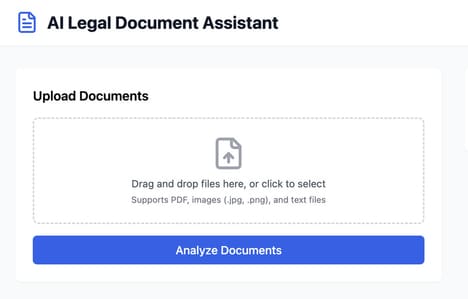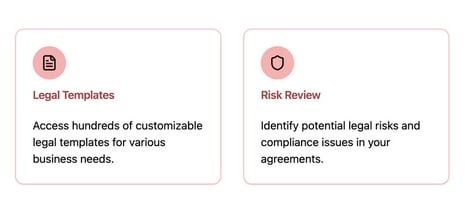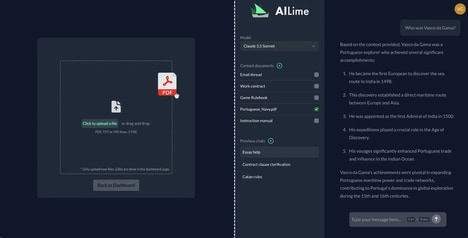
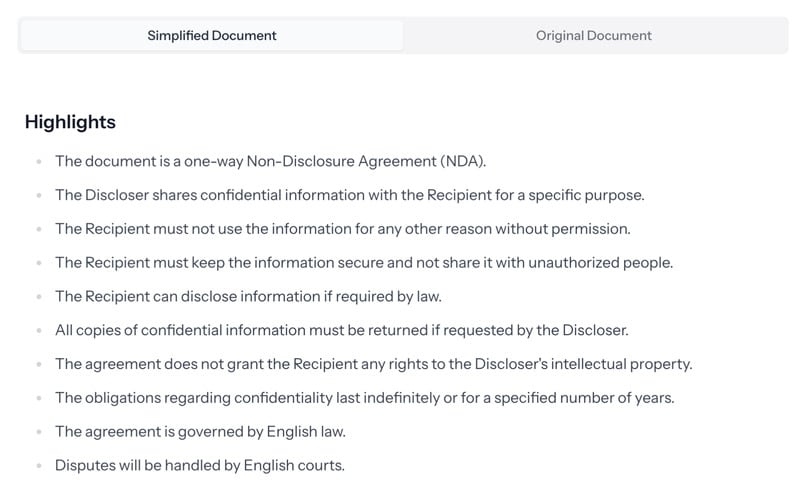
Legal Document Simplifier is an AI-powered platform designed to make complex legal documents more accessible and understandable. The tool analyzes dense legal language and produces simplified versions that retain the original meaning while improving clarity. Users can process contracts, agreements, and other legal materials more efficiently, reducing the time required to interpret and act on legal content.
From a business perspective, the platform addresses common challenges such as legal literacy, resource constraints, and the cost of professional legal review. By automating the simplification process, organizations can streamline operations, reduce reliance on external legal support, and improve internal understanding of legal obligations. Legal Document Simplifier illustrates the application of AI in professional services, combining natural language processing with document analysis to enhance productivity and informed decision-making.
Image Credit: Legal Document Simplifier
Key Themes Behind This Trend
- AI-powered Legal Plain-language
- Platforms that translate statutory and contractual text into plain language enable broader stakeholder comprehension and create scope for scalable document production and client-facing transparency.
- Automated Contract Intelligence
- Algorithms that extract obligations, deadlines, and risk metrics from agreements open possibilities for real-time risk scoring and portfolio-level contract management without continual attorney intervention.
- Embedded Compliance Narratives
- Tools that generate contextualized summaries and explanatory notes for regulatory clauses create opportunities for integrated decision-support within operational workflows.
Where This Applies
- Legal Services
- Simplification tech can shift billable-hour models by enabling lower-cost, high-volume advisory offerings and risk-tiered service packages.
- Corporate Compliance
- Clear automated interpretations of regulatory text can transform monitoring programs by enabling continuous, scalable assessment of policy adherence across operations.
- Insurance
- Readable policy translations and automated obligation extraction can reduce claims disputes and enable products with dynamically priced coverage tied to contract-derived risk signals.