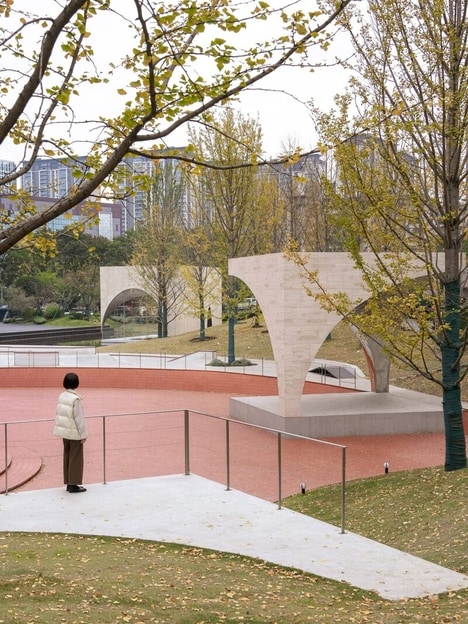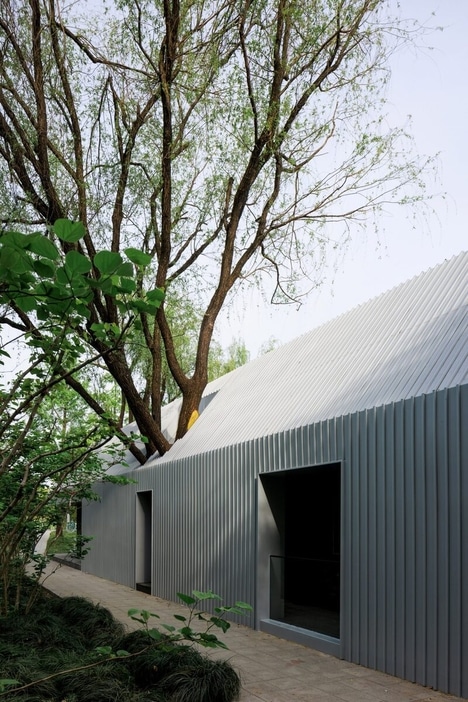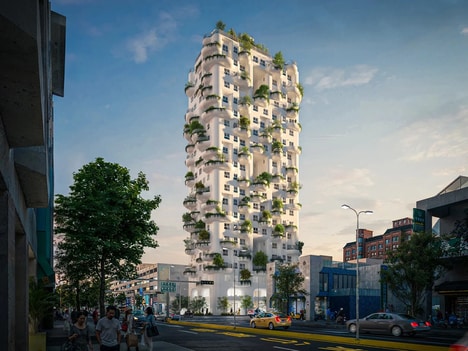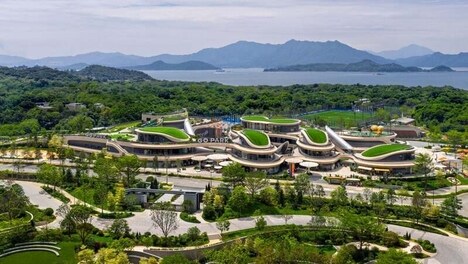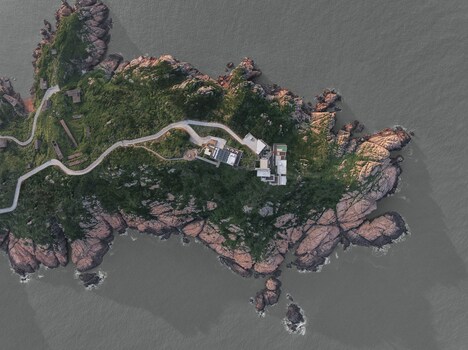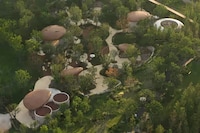
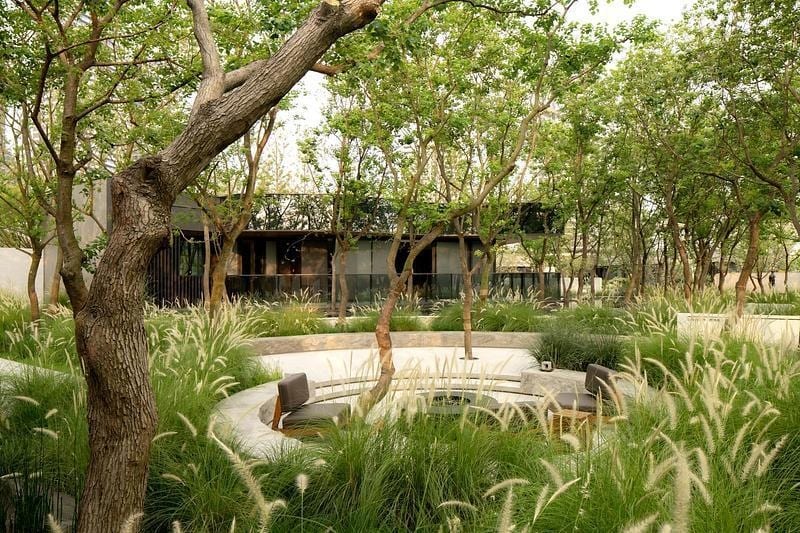
Chengdu MaiWei Landscape Architecture Studio’s Luxelakes C7 South Golden Bay Model Island represents a considered integration of ecological restoration, residential architecture, and landscape design in the central core lake area of Luxelakes. The project adopts a “light landscape intervention” approach guided by the theme “over the wilderness,” moving from open lake waters to wetlands, rolling grasslands, scattered buildings, and an elevated viewing platform.
The C7 South Golden Bay Model Island project delivers a horizontal-to-vertical transition that creates a progression from public to private spaces. In doing so, Chengdu MaiWei Landscape Architecture Studio worked to enhance the sense of discovery and spatial variety.
Overall, the layout balances ecological function with human experience, allowing the site to appear as if it has emerged naturally from the wild, with architecture and landscape mutually reinforcing each other to achieve visual continuity and aesthetic unity.
Image Credit: PrismImage
What's Driving This Trend
- Ecological-restoration Integration
- A design approach where native wetland systems are intentionally reintroduced within residential cores to create multifunctional habitats that enhance biodiversity and stormwater management.
- Light-landscape Intervention
- Minimal, reversible landscape treatments that prioritize natural succession and allow architecture to appear as emergent features within existing ecosystems.
- Horizontal-to-vertical Transition Design
- Layered spatial progressions from public lake edges to private elevated platforms that create varied user experiences while preserving ecological gradients.
Who This Affects Most
- Residential-development
- Mixed-density housing models that embed restored wetlands and green corridors as primary neighborhood amenities, shifting value from private yards to shared ecological assets.
- Landscape-architecture
- Practice models that combine ecological science, low-impact construction techniques, and aesthetic placemaking to deliver sites that regenerate rather than replace local ecosystems.
- Eco-tourism-and-recreation
- Destination designs centered on subtle, habitat-rich landscapes and elevated viewing nodes that reframe leisure as immersive nature education and conservation support.