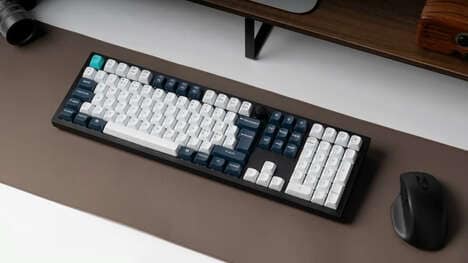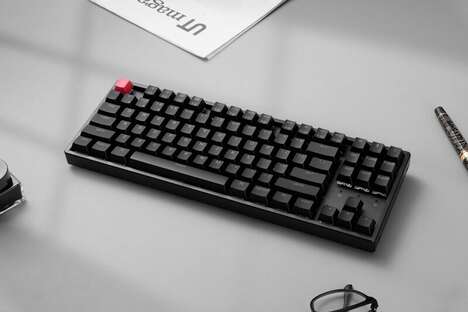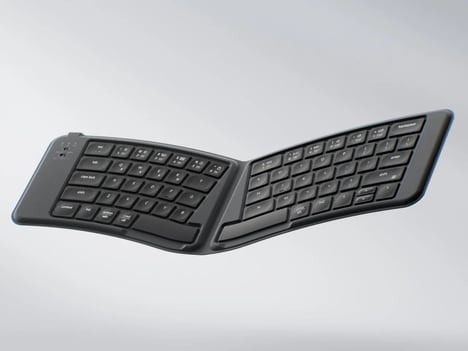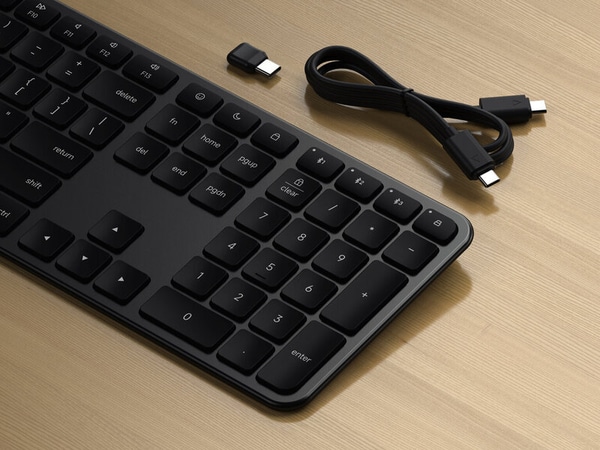
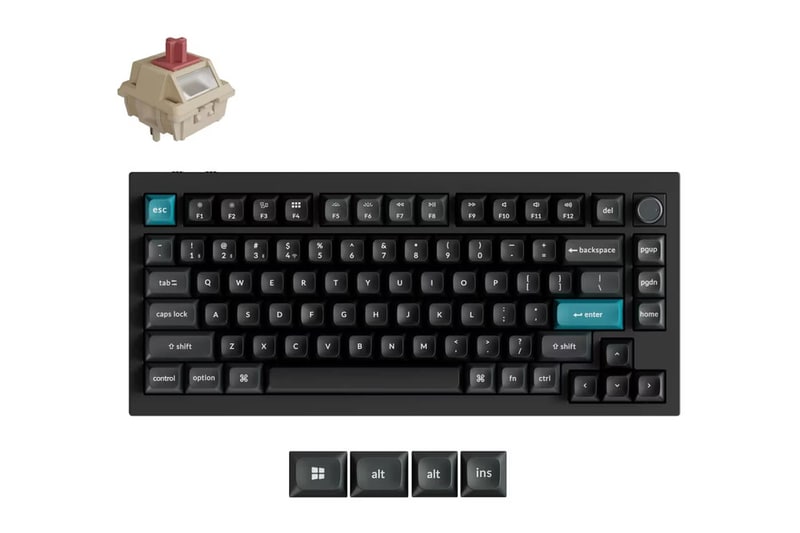
The Keychron Ultra 8K series has made its market debut as a series of keyboards that are engineered to help redefine what's possible in terms of wireless performance at the desktop. The keyboards include the Keychron Q1 Ultra 8K and the Keychron V5 Ultra 8K, which are both supported by the ZMK firmware architecture with an open-source protocol. The keyboards are thus capable of pushing beyond existing perceptions of what's possible for wireless connectivity with the ability to deliver as much as 660-hours of use per charge, which translates to around four months of daily use.
The Keychron Ultra 8K series introduces the Keychron Q1 Ultra 8K in a 75% layout with a CNC-machined aluminum chassis for $229.99, while the Keychron V5 Ultra 8K has a 96% layout with a rigid polymer body for $119.99.
Key Themes Behind This Trend
- Ultra Long Battery Life
- Sustained 660-hour wireless operation signals a shift toward peripherals designed for prolonged untethered use that can enable new device ecosystems relying on months-long maintenance-free power cycles.
- Open Source Firmware Adoption
- Broad use of ZMK and open-source protocols is creating an interoperable development environment that allows rapid customization and community-driven feature expansion across input devices.
- Premium Material Differentiation
- Clear segmentation between CNC-machined aluminum and rigid polymer builds is emphasizing tactile and aesthetic quality as a competitive axis that can redefine value perception for mid-range and premium peripherals.
Where This Applies
- Computer Peripherals
- High-efficiency wireless keyboards are reshaping expectations for reliability and form factor, influencing design priorities across mice, headsets, and docking solutions.
- Remote and Hybrid Work Solutions
- Long-duration battery performance and customizable firmware are aligning with distributed work needs, enabling more durable and personalized workstation setups for remote professionals.
- Consumer Electronics Manufacturing
- Differentiated materials and open firmware choices are prompting manufacturers to rethink supply chains and modular production approaches to support both premium finishes and firmware-driven feature sets.