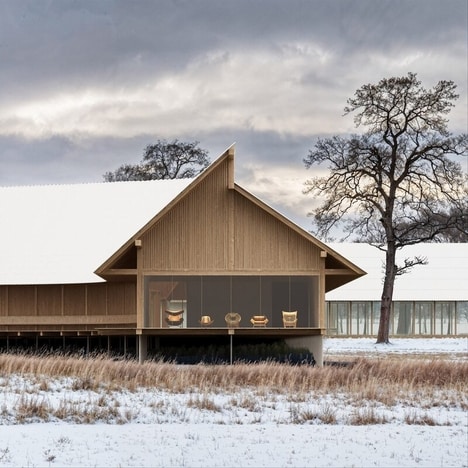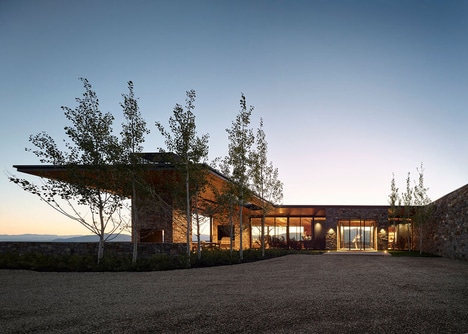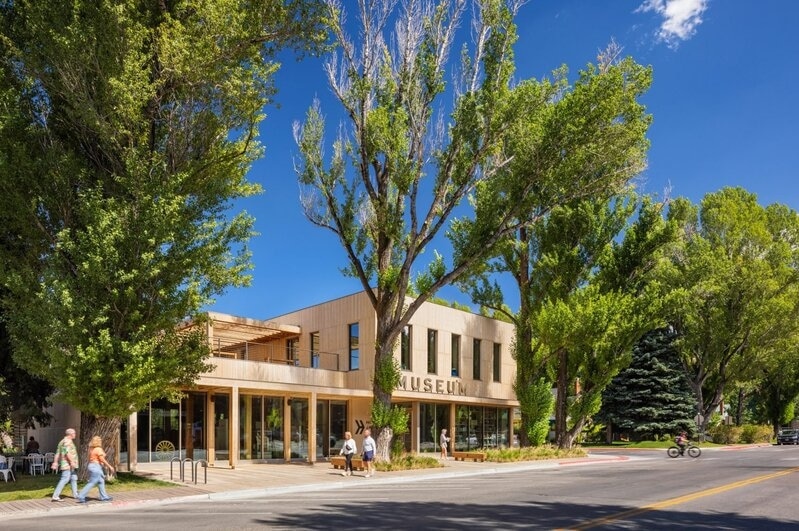
HGA’s Jackson Hole History Museum anchors itself in the heart of downtown Jackson, Wyoming, with a three‑story, 13,200 ft² building beside two historic cabins and public outdoor areas. The design echoes the town’s Old West storefronts—featuring timber columns, vertical wood siding, and a front boardwalk inspired by local cowboy vernacular. Transparency is key: large glass walls reveal gallery spaces and historic cabins to passersby, inviting casual community interaction and strengthening the museum’s role as an accessible civic hub.
Located just steps from Jackson Town Square at 175 East Broadway, the museum is strategically placed to be part of the urban fabric and public life. A front porch, boardwalk, rooftop terrace, and patios connect interior programming—like classrooms and exhibits—with outdoor events and informal gathering spots. The use of sustainable materials—drought‑resistant landscaping, triple‑pane glazing, VRF systems, and low‑flow fixtures—demonstrates a care for ecological stewardship in the sensitive mountain environment
Image Credit: Albert Vecerka
What's Driving This Trend
- Community-centric Museum Spaces
- Merging historical displays with community spaces allows museums to become vibrant social hubs, increasing foot traffic and engagement from both locals and tourists.
- Sustainable Architectural Design
- Incorporating eco-friendly materials and systems in historical and cultural establishments helps promote sustainability and attract environmentally conscious visitors.
- Blended Indoor-outdoor Engagement
- Creating seamless transitions between indoor exhibits and outdoor event areas fosters interactive experiences and encourages more dynamic use of museum spaces.
Who This Affects Most
- Cultural Tourism
- Integrating local heritage elements into modern architectures can enhance the cultural tourism industry by offering visitors a more authentic and immersive experience.
- Architecture and Design
- The shift towards incorporating traditional aesthetics and sustainable practices can revitalize design approaches, fostering innovation in urban development and heritage conservation.
- Sustainable Construction
- The demand for eco-friendly building techniques in sensitive environments is driving advancements in sustainable construction methodologies that prioritize both form and function.