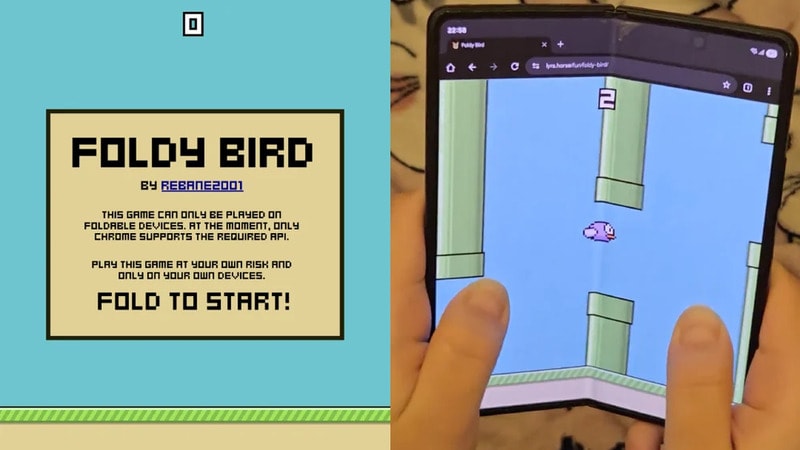
Foldy Bird is a browser-based mobile game designed specifically for foldable smartphones, using the device’s hinge as the main control mechanism. Instead of tapping the screen, players fold and unfold their phone to keep a pixelated bird airborne while navigating through gaps, echoing the mechanics of classic side-scrolling obstacle games. The game reads hinge angle data through foldable device sensors, translating physical motion directly into gameplay input. It runs in a mobile browser and does not require installation, making it accessible on compatible Android foldable devices.
The game was created by independent developer Rebane and is intended to demonstrate alternative interaction models enabled by foldable hardware. Foldy Bird relies on posture and angle-detection APIs already built into foldable phones, highlighting how hardware features can shape new forms of play. The project is presented as an experimental use of foldable technology rather than a commercial release.
Image Credit: Foldy Bird
Key Themes Behind This Trend
- Hinge-controlled Gaming
- Using foldable phone hinges as control inputs can lead to innovative gameplay experiences, offering a novel interaction model that reimagines conventional gaming mechanics.
- Sensor-driven Interactions
- Leveraging device sensors for gameplay mechanics introduces new possibilities for creating immersive experiences by translating physical actions into virtual outcomes.
- Browser-based Gaming
- Developing games that run directly in mobile browsers simplifies access and expands reach, eliminating barriers like app installations while leveraging device capabilities.
Where This Applies
- Mobile Gaming
- The mobile gaming industry can explore foldable tech to create unique control schemes, offering players fresh and engaging ways to interact with games.
- Consumer Electronics
- Consumer electronics manufacturers have an opportunity to enhance product experiences by integrating and promoting hardware features like hinges in interactive applications.
- Web Development
- Web development can capitalize on the growing interest in browser-based applications to create rich, sensor-responsive experiences without the need for native app deployment.