
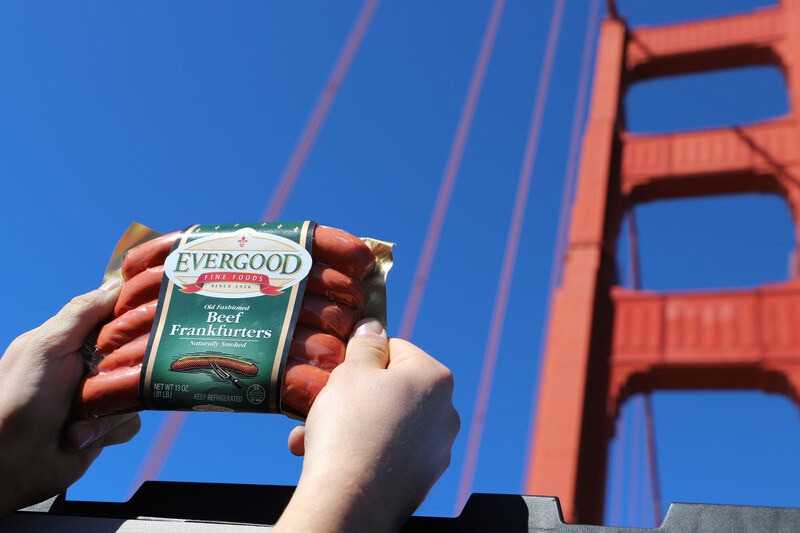
Evergood Sausage Company, a San Francisco-based food producer, is commemorating its one-hundredth year in operation by highlighting a century of continuous family management and a consistent approach to sausage making that relies on traditional methods such as natural hardwood smoking. The company traces its origins to a neighborhood butcher shop opened by a German immigrant in the 1920s and has since evolved into a nationally distributed brand that supplies its products to major grocery chains, stadium concessions, and foodservice programs across the country.
Throughout this expansion, Evergood Sausage Company has remained under the guidance of the same family — now in its third generation — and continues to manufacture its sausages at a facility in San Francisco's historic Butchertown district. The product line includes a range of varieties made from pork, beef, and chicken, all positioned as being crafted from whole-food ingredients without shortcuts.
Image Credit: Evergood Sausage Company
Why This Trend Is Growing
- Heritage Craftsmanship Resurgence
- Consumer demand for artisanal, heritage-prepared foods opens room for scalable preservation of traditional smoking and butchery techniques.
- Transparent Ingredient Sourcing
- Increasing preference for whole-food ingredient transparency creates potential for traceable supply chains that authenticate origin and processing methods.
- Family Owned Legacy Branding
- Centuries-old family stewardship provides a narrative asset that can be translated into premium provenance-driven brand experiences.
Industries Being Reshaped
- Packaged Meat Retail
- Mass retail channels could be disrupted by premium traditionally smoked sausages that command higher margins through perceived authenticity.
- Foodservice and Concessions
- Stadiums and large-scale foodservice may adopt heritage-style offerings to differentiate menus and support premium pricing strategies.
- Food Manufacturing Technology
- Food processing equipment and preservation technologies adapted for small-batch hardwood-smoking workflows could enable wider adoption of traditional methods at scale.