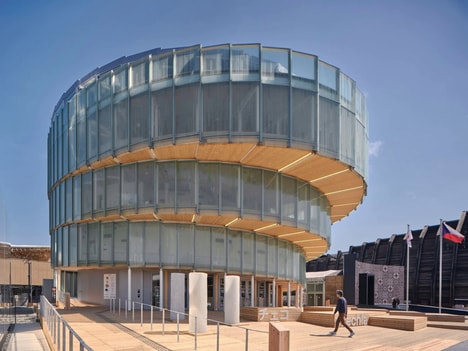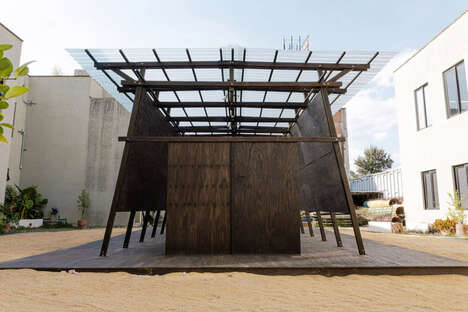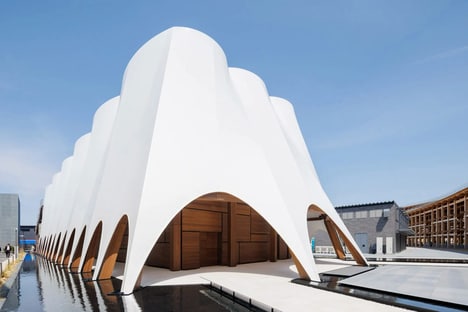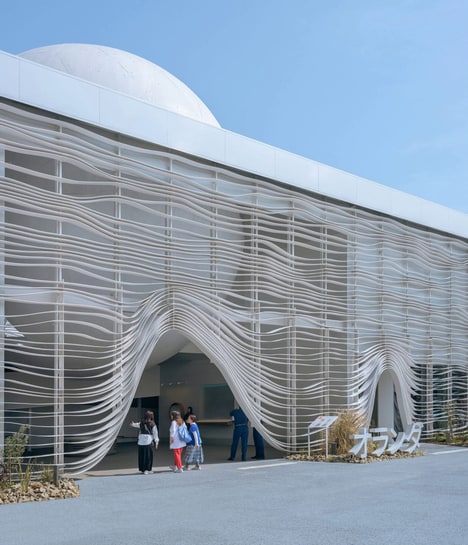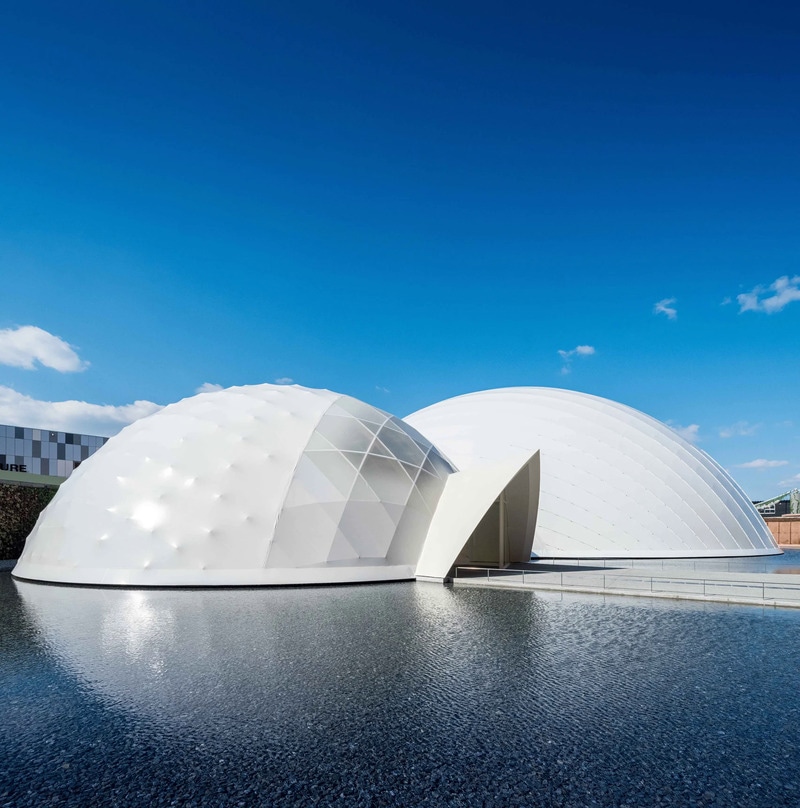
Japanese architect Shigeru Ban has used materials including cardboard tubes and laminated bamboo to create the Blue Ocean Dome pavilion. It is set up at Expo 2025 Osaka and hosts exhibits including works by designer Kenya Hara. Ban has also used carbon-fibre reinforced plastic tubes to create the dome, which brings attention to the value of the world's oceans.
It is just outside the Grand Ring. Ban explained to Dezeen, "In countries that have very strong building regulations, we cannot use natural bamboo as a building material, including in Japan. However, if we laminate the bamboo, we can control the quality, strength and durability. So in the pavilion, I'm using laminated bamboo as a structure in a very unusual way."
Image Credit: Hiroyuki Hirai
Why This Trend Is Growing
- Sustainable Building Materials
- The innovative use of sustainable materials like laminated bamboo and cardboard tubes opens possibilities for eco-conscious architectural designs.
- Temporary Architectural Structures
- The creation of pavilions using easily assembled and disassembled components highlights opportunities for flexible, temporary architectural solutions.
- Integration of Technology in Design
- Incorporating carbon-fibre reinforced plastics into architectural structures signifies a move towards merging advanced materials with traditional design methods.
Industries Being Reshaped
- Eco-friendly Architecture
- Employing materials such as laminated bamboo in construction promotes growth in the eco-friendly architecture industry focused on sustainable building practices.
- Exhibition Infrastructure
- The development of innovative pavilions for exhibitions like Expo 2025 suggests new avenues for the exhibition infrastructure sector to adopt sustainable practices.
- Advanced Composite Materials
- The architectural application of carbon-fibre reinforced plastic tubes presents novel opportunities for the advanced composite materials industry in construction.