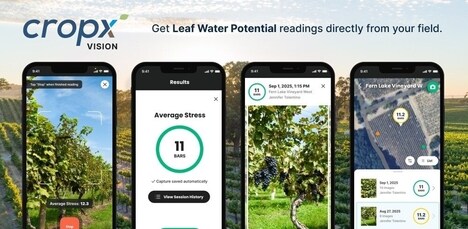

Space Technology on Crop Damage Tool refers to an agricultural analytics solution that uses satellite imagery and artificial intelligence to assess and monitor crop health. By analysing data captured from space, the system can identify early signs of stress, disease, or environmental damage across large farming areas.
This enables more accurate and timely interventions compared to traditional ground-based inspection methods. The tool is typically used by agribusinesses, insurers, and government bodies to support decision-making, risk assessment, and resource allocation. Its data-driven approach helps improve forecasting accuracy and operational efficiency in agricultural management. It reflects broader trends in precision agriculture, where remote sensing and AI are combined to optimise crop protection, reduce losses, and enhance sustainability through more informed and proactive farming practices.
Image Credit: Space Technology Tool
What's Driving This Trend
- Satellite-driven Precision Monitoring
- A fusion of high-frequency satellite imagery and analytics that delivers field-level visibility of crop stress patterns across vast landscapes.
- AI-powered Crop Health Forecasting
- Predictive models using historical and real-time remote-sensing data that produce early warning signals for disease, drought, and yield deviations.
- Remote Risk Assessment Platforms
- Cloud-based systems that aggregate multispectral satellite feeds and AI scores to quantify spatially explicit damage and exposure for stakeholders.
Who This Affects Most
- Agribusiness and Farm Management
- Large-scale producers and service providers can gain granular, time-series crop insights that alter resource allocation and input optimization strategies.
- Crop Insurance and Risk Underwriting
- Insurers are presented with remotely derived loss estimates and objective per-field damage metrics that can redefine claims validation and pricing models.
- Government Agricultural Policy and Environmental Monitoring
- Public agencies can access consistent, auditable spatial data streams for disaster response, subsidy distribution, and sustainability compliance tracking.