
Intrinsic advanced materials is expanding the use of its CiCLO technology across performance apparel, workwear and everyday fashion, signaling a shift toward biodegradable synthetic textiles. Embedded directly into polyester and nylon fibers, CiCLO enables materials to break down more efficiently in environments like soil, seawater and wastewater, helping address microplastic pollution while maintaining durability and performance.
Brands such as Fruit of the Loom, ROFA and Black Diamond are integrating CiCLO into products ranging from sweats and fleece to industrial workwear, reflecting growing adoption across categories and regions. As synthetic fibers account for the majority of global textile production, scalable solutions like this are becoming increasingly important for reducing environmental impact.
This shift highlights a broader move toward circular materials, where sustainability is built into the fabric itself. For consumers, it means access to familiar, high-performance garments that also align with rising expectations around eco-conscious design
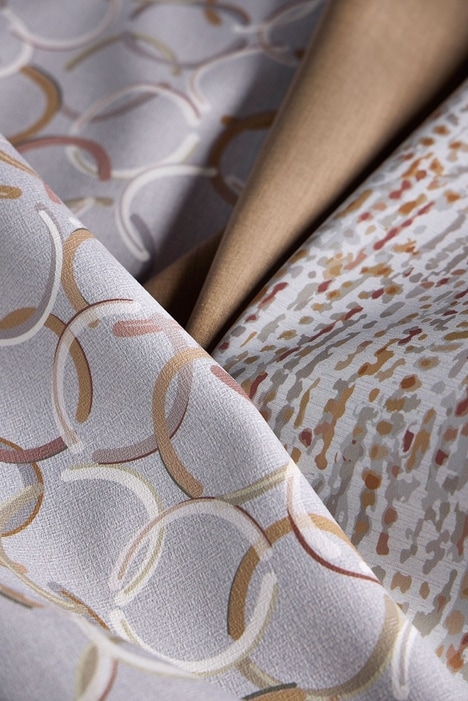
Image Credit: Fruit of the Loom/ROFA® MOVE EASY
Key Themes Behind This Trend
- Biodegradable Synthetic Fibers
- Creates potential for mass-market performance fabrics that retain durability while significantly shortening environmental persistence compared with conventional polyester.
- Embedded Degradability Additives
- Introduces a pathway for fibers to carry built-in breakdown functionality, enabling textiles to degrade in soils, seawater and wastewater without altering consumer use characteristics.
- Circular Materials Integration
- Signals a shift toward designing garments whose end-of-life is managed through material-level innovation, reducing reliance on mechanical recycling and landfill-bound waste streams.
Where This Applies
- Performance Apparel
- Brands in technical sportswear could offer biodegradable high-performance lines that disrupt the trade-off between longevity and post-consumer environmental harm.
- Workwear and Industrial Textiles
- Standardizing degradable synthetics in protective and uniform fabrics may transform procurement and disposal practices in industries with high garment turnover.
- Wastewater Treatment and Recycling
- New fiber chemistries that break down in wastewater systems create opportunities for treatment facilities and recyclers to rethink microplastic capture and processing models.