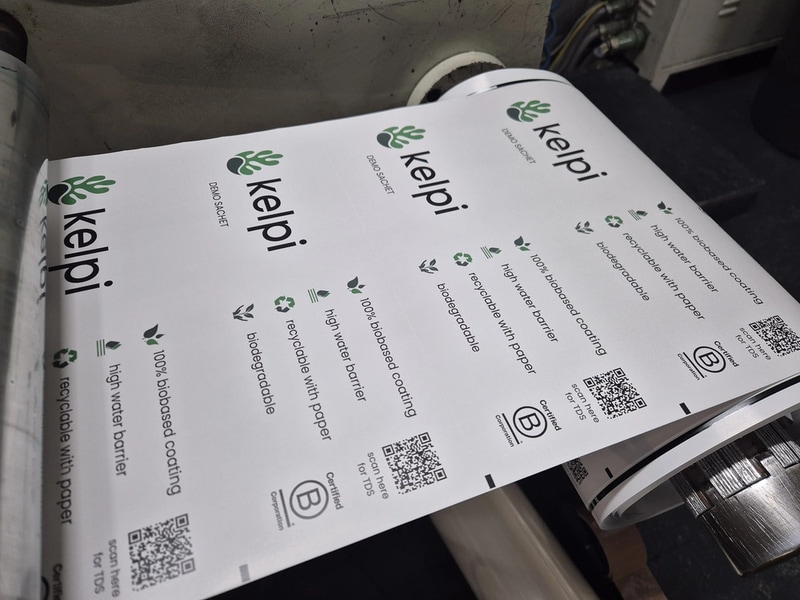
Homethings launched refill sachets treated with Kelpi's seaweed-derived coating, a biodegradable surface finish designed to improve eco-performance while maintaining package integrity. The collaboration pairs Homethings' concentrated cleaning formulas with Kelpi's marine polymer technology, featuring a thin, plant-based film applied to standard sachet substrates.
The coated sachets were introduced as part of Homethings' refill lineup and were positioned to reduce reliance on conventional plastics. The packaging retained lightweight convenience and compatibility with existing sachet formats, while Kelpi's coating aimed to accelerate environmental breakdown compared with petroleum-derived coatings.
For consumers, the roll-out offers a lower-plastic alternative for single-dose refills, aligning with demand for circular packaging solutions and cleaner ingredient stories. The move underscores a broader trend of brands adopting bio-based surface treatments to shrink plastic footprints without altering product use.
Image Credit: Kelpi
Why This Trend Is Growing
- Bio-based Surface Treatments
- Plant- and algae-derived coatings that replace petrochemical laminates are creating new pathways for compostable and fast-degrading flexible packaging.
- Seaweed-derived Packaging Films
- Marine polymers from kelp and other seaweeds are enabling thin, functional films that balance barrier performance with biodegradability in single-use formats.
- Low-plastic Refill Formats
- Concentrated refill sachets and pouches designed to minimize plastic content are reshaping product delivery models toward lightweight, circular supply chains.
Industries Being Reshaped
- Household Cleaning
- Concentrated detergents paired with biodegradable sachet technologies can disrupt shelf products by reducing packaging waste without altering consumer dosing habits.
- Flexible Packaging Materials
- Suppliers of films and coatings face opportunities to replace multilayer plastic laminates with compostable bio-coatings that remain compatible with existing converting equipment.
- Marine Biomaterials and Aquaculture
- Scaling kelp cultivation for polymer extraction introduces alternative supply chains where biomass production is directly tied to material innovation and coastal economies.